The FDA and Peptides.

The 2026 “Compounding” Reclassification
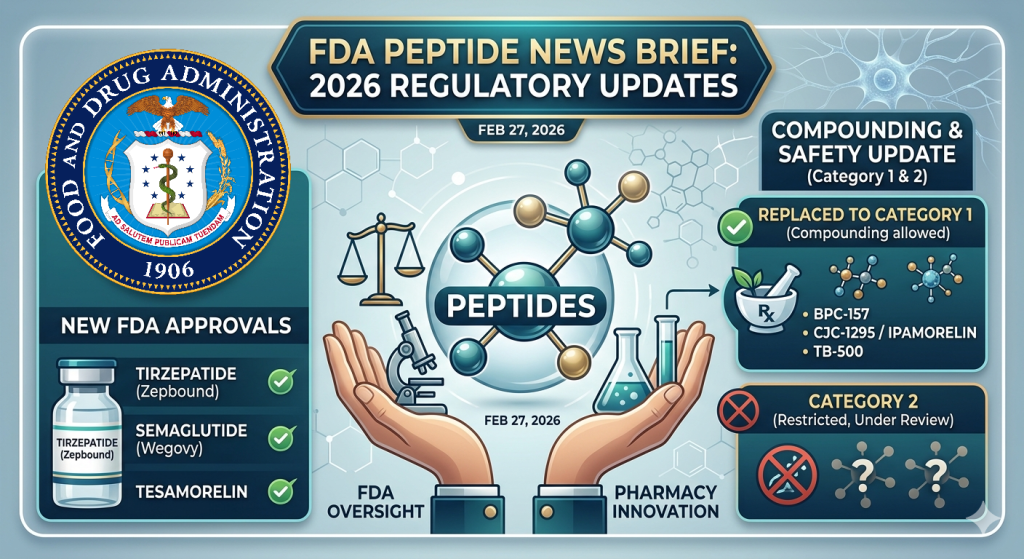
As of February 27, 2026, a major regulatory shift occurred. Many popular peptides that were previously restricted (placed in “Category 2”) have been moved back to Category 1.
This means licensed compounding pharmacies can legally prepare them again with a doctor’s prescription, though they remain unapproved drugs for research or off-label use.
Peptides recently restored to legal compounding status include:
- BPC-157: Often researched for tissue and gut repair.
- CJC-1295 & Ipamorelin: Frequently used together for growth hormone signaling.
- Thymosin Alpha-1: Researched for immune modulation.
- TB-500 (Thymosin Beta-4): Studied for injury recovery and flexibility.
- GHK-Cu: A copper peptide used for skin regeneration and wound healing.
- AOD-9604: A fragment studied for fat metabolism.
- Selank & Semax: Neuropeptides studied for anxiety and cognitive function.
- MOTS-C: A mitochondrial peptide focused on metabolic regulation.
3. Summary Table: Approval vs. Legal Access
| Peptide Type | Status | Common Examples |
| FDA Approved | Fully vetted; sold as brand-name drugs. | Semaglutide, Tirzepatide, Tesamorelin |
| Category 1 (Compounded) | Legal for pharmacies to mix; requires prescription. | BPC-157, CJC-1295, Thymosin Alpha-1 |
| Category 2 (Restricted) | Pharmacies currently restricted from mixing. | Varies based on ongoing FDA safety reviews. |
| Investigational | Currently in Phase 3 clinical trials. | Retatrutide (Triple agonist for weight loss) |